Lesson 2: Getting to Grips with Wooden Rackets & Bats

Wood remembers everything: every humid summer, every dry winter. Here you learn to read that history and care for it gently.

Begin Step One
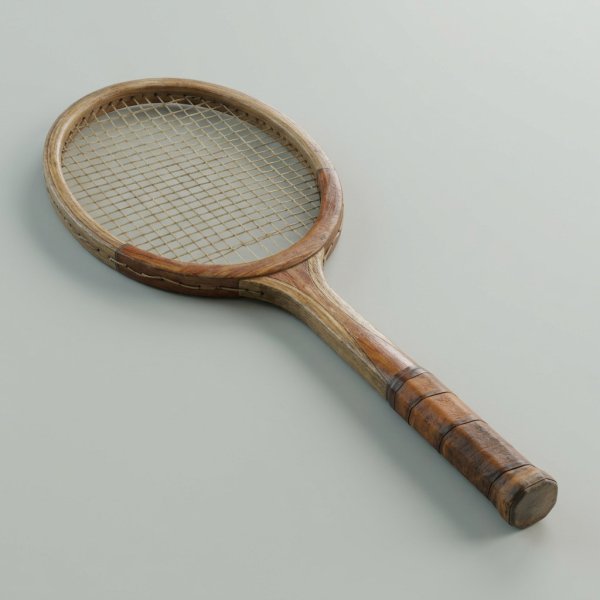
Soft-lit 3D render of a vintage wooden tennis racket on a pale grey background

Know What You Are Holding

Wooden rackets and bats are built differently, so start by naming your piece. Most classic tennis rackets, like the Dunlop Maxply, the Slazenger Challenge or the Wilson Jack Kramer, are made from thin laminated layers of wood glued and bent into shape. Baseball bats, like the famous Louisville Slugger from Hillerich & Bradsby, are usually turned from a single billet of ash, maple or hickory.

Laminates can separate at the layers; solid bats tend to crack along the grain. Knowing this tells you where to look. Check the racket throat and shoulders, and the bat handle and barrel. Note decals and stamps too, because they help with dating and value. As with gloves, if a piece is signed or rare, ask an expert before touching the finish.

Identify the Finish

Most vintage wooden gear wears a clear coat such as varnish or lacquer, sometimes with painted decals underneath. Bats may have a lacquer finish, an oil finish or a bone-rubbed surface. Why does this matter? Because cleaners and solvents behave very differently on each.

A simple, safe test: on a hidden spot, rub a cotton swab with a drop of plain water. If nothing happens, try a swab barely dampened with mineral spirits. If the finish turns soft or sticky, stop. You have learned what not to use. Beginners almost never need to strip a finish; preserving the original surface keeps both the look and the value.

Clean Without Soaking

Dust first with a soft dry cloth. Then use a cloth wrung out until barely damp with a drop of mild dish soap, and wipe in the direction of the grain. Dry immediately with a clean cloth. Wood swells with water, and swelling plus drying is how laminations lift and cracks grow.

For grime around strings or grip wraps, cotton swabs give you control. Leather grips on old rackets can be treated just like the glove leather in Lesson 1: clean lightly, then condition sparingly.

Ease Small Warps and Mend Small Splits

Wooden rackets were sold with wooden or metal racket presses for a reason: they warp when left loose. If your racket has a mild warp, a vintage press clamped evenly and left for several weeks in a stable room may help a little. Do not use steam or heat at home; you risk weakening the glue between layers.

A lifting lamination or a short surface split can be closed with a little wood glue worked in with a thin card, then held with padded clamps for a day. Wipe away squeeze-out at once. Keep repairs small and neat. Deep cracks in bats, especially through the handle, are a different story; see the safety note below.

Safety first: a repaired cracked bat or racket is for display only. Cracked wood can break suddenly under impact.

Protect and Display

For a sound original varnish, a very thin layer of a microcrystalline wax such as Renaissance Wax, buffed gently, adds a soft sheen and some protection. Oil-finished bats can take a light wipe of boiled linseed oil or pure tung oil; rub in, then wipe off all excess. Store oily rags flat outdoors to dry before discarding, because linseed oil rags can self-heat and catch fire.

Old natural gut or synthetic strings are often brittle; most collectors leave original strings for display. If you want to play, a stringer experienced with wooden frames can recommend a low tension so the old frame is not stressed.

Hang or stand your piece away from radiators, windows and damp walls. Stable, moderate humidity is the quiet secret of every museum, from the Wimbledon Lawn Tennis Museum to the Louisville Slugger Museum & Factory. Next up: metal, chrome and grease in Lesson 3.